









AI & Machine Learning Programs Abroad — 2026 Guide
A breakdown of the strongest AI/ML Master's programs abroad and what admissions committees are actually looking for this cycle.
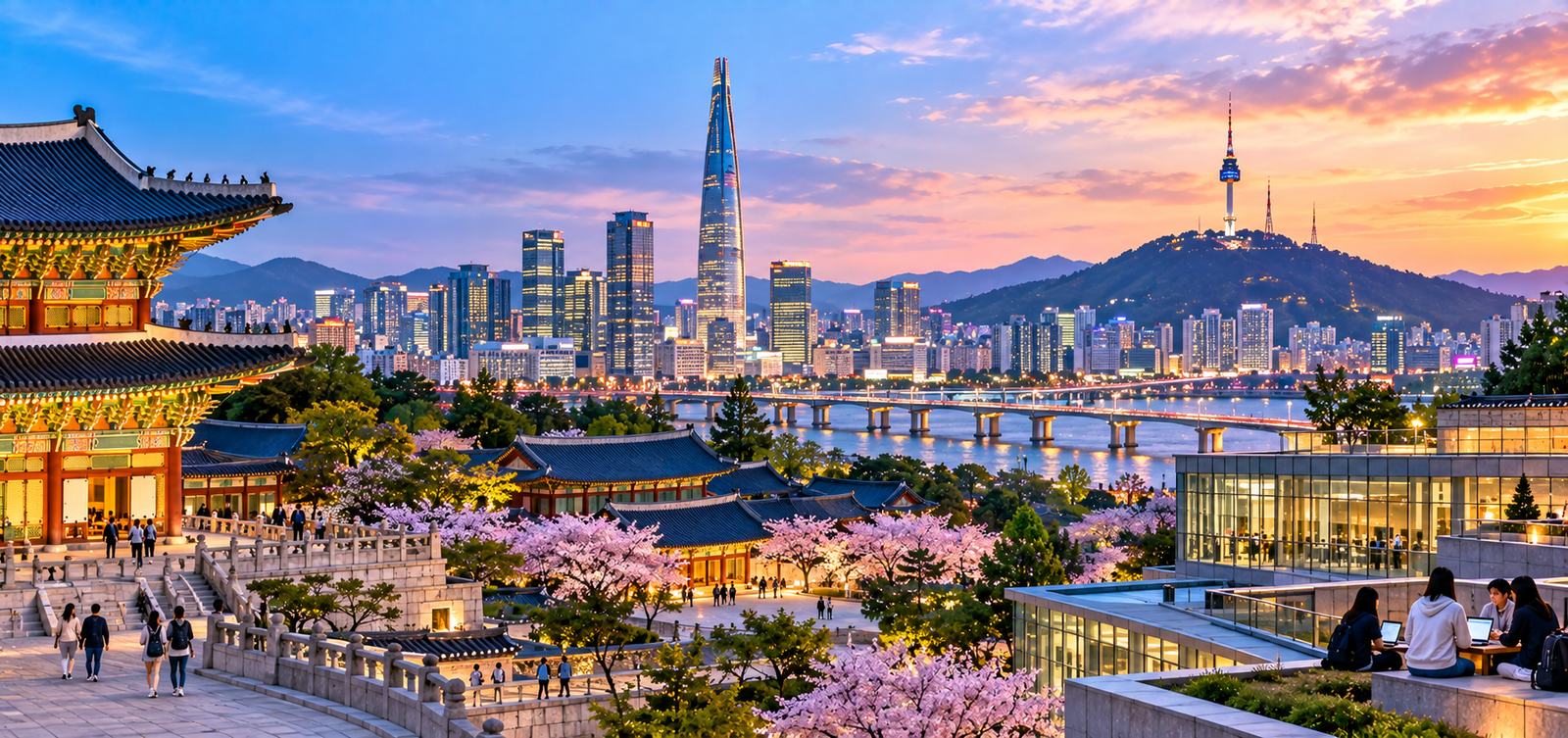
 Sukhada's Study Destination Guide
Everything you need to know about tuition, cost of living, post-study work rights and top universities in South Korea — backed by Sukhada's counselling team.
South Korea at a Glance
South Korea's universities are closely linked with global brands like Samsung, Hyundai and LG. Scholarships such as GKS can cover tuition, airfare and a monthly allowance.
Quick Facts
Our partner universities in South Korea offer 268 programmes. The largest subject areas are Engineering, Natural Sciences, Business & Management.
A programme can appear in more than one subject area.
A bachelor's degree in South Korea usually takes 4 years and a master's takes 2 years. The main intakes are March, September.
4.5 GPA scale (A+ = 4.5)
TOPIK for Korean-taught; IELTS/TOEFL for English-taught
Most students start 10–12 months before their intake. Exact deadlines vary by university and programme.
Typical bachelor's tuition in South Korea: KRW 7–16 million/yr. Master's tuition: KRW 8–18 million/yr. Living costs, covering rent, food and transport: KRW 900,000–1,400,000/month.
Figures are indicative ranges for international students and change every year. Your counsellor will confirm exact fees for your shortlisted courses.
Indian students apply for the D-2 Student Visa after receiving the Certificate of Admission. Visa fee: Around USD 60 (varies). Typical processing time: 1–3 weeks.
Immigration rules change often — always confirm on the official government website before you apply.
Checklist
Four seasons; humid summers and cold winters. Summers: Hot and humid, 28–33°C. Winters: Cold, often below 0°C.
Banks open accounts with your passport and Alien Registration Card; some campuses have bank branches.
Safety: Very high. Healthcare: Excellent.
Graduate job demand in South Korea is moderate. Entry-level salaries are roughly KRW 30–40 million/yr, rising to about KRW 50–70 million/yr with experience.
Salary figures are indicative gross annual ranges and vary by city, role and employer.
Fast-paced and hierarchical, with a strong café, food and pop-culture scene.
Well-known options for South Korea include Global Korea Scholarship (GKS), University tuition waivers. Eligibility and deadlines change every year, so check the official page before applying.
Our team tracks live scholarship listings across 150+ university and government portals. Here are the common categories students in South Korea typically qualify for — talk to a counsellor for current deadlines and amounts.
Merit Scholarships
Awarded by universities based on academic performanceNeed-Based Financial Aid
Partial tuition waivers based on demonstrated financial needGovernment & Institutional Grants
Country and institution-run funding programs for international studentsSukhada Partner Discounts
Fee-waivers and priority processing through our university partnershipsWe work directly with 40 verified universities across South Korea — browse the full list and filter by course, budget and intake.
Typical tuition for international students in South Korea: KRW 7–16 million/yr for a bachelor's degree and KRW 8–18 million/yr for a master's. Living costs: KRW 900,000–1,400,000/month, depending on the city.
The visa you need is the D-2 Student Visa, and the application is based on the Certificate of Admission. Visa fee: Around USD 60 (varies). Typical processing time: 1–3 weeks.
Bank balance of around USD 20,000 (varies by embassy). The exact amount is revised from time to time, so confirm it with the official immigration website before applying.
Student work rules in South Korea: Up to 25 hrs/week, depending on TOPIK level.
Post-study work in South Korea: D-10 Job Seeker visa for up to 2 years. Long-term settlement route: E-7 skilled work visa, then F-2 or F-5 residence.
Safety in South Korea: Very high. Healthcare: Excellent.
Yes (National Health Insurance). Typical cost: About KRW 70,000/month.
Graduate job demand in South Korea is moderate, led by Electronics, Automotive, IT. Entry-level salaries are roughly KRW 30–40 million/yr.
About 15,000 Indian nationals. Indian food: Available in Seoul (Itaewon).
The main intakes in South Korea are March, September. A bachelor's degree usually takes 4 years and a master's takes 2 years.
TOPIK for Korean-taught; IELTS/TOEFL for English-taught. Minimum scores differ by university and course, so check each programme page.
We currently work directly with 40 verified universities in South Korea, spanning a range of budgets and course levels.
Book a free session with a Sukhada counsellor — no obligation, no pressure, just a clear plan for South Korea.
A closer look at some of the institutions our students are applying to right now.
 United States
Cambridge
 United Kingdom
London
United States
Stanford
United Kingdom
Oxford
United States
Cambridge
United Kingdom
Cambridge
A rotating shortlist our counsellors flag as genuinely worth the paperwork.


 Course Guide
A breakdown of the strongest AI/ML Master's programs abroad and what admissions committees are actually looking for this cycle.
 Scholarships
The merit and need-based awards our counsellors recommend most often, and how to build a strong application for each.
 About Sukhada
Why we built Sukhada around mentors instead of sales targets — and what that means for the advice you actually get.
Fill in your details to enquire about University
Share your details and a Sukhada counsellor will reach out to help you plan your application to South Korea.
Choose a service, pick your date and time, and share your details — our team will confirm your slot shortly.
Our team will confirm your slot shortly by email or phone.